The History of Design

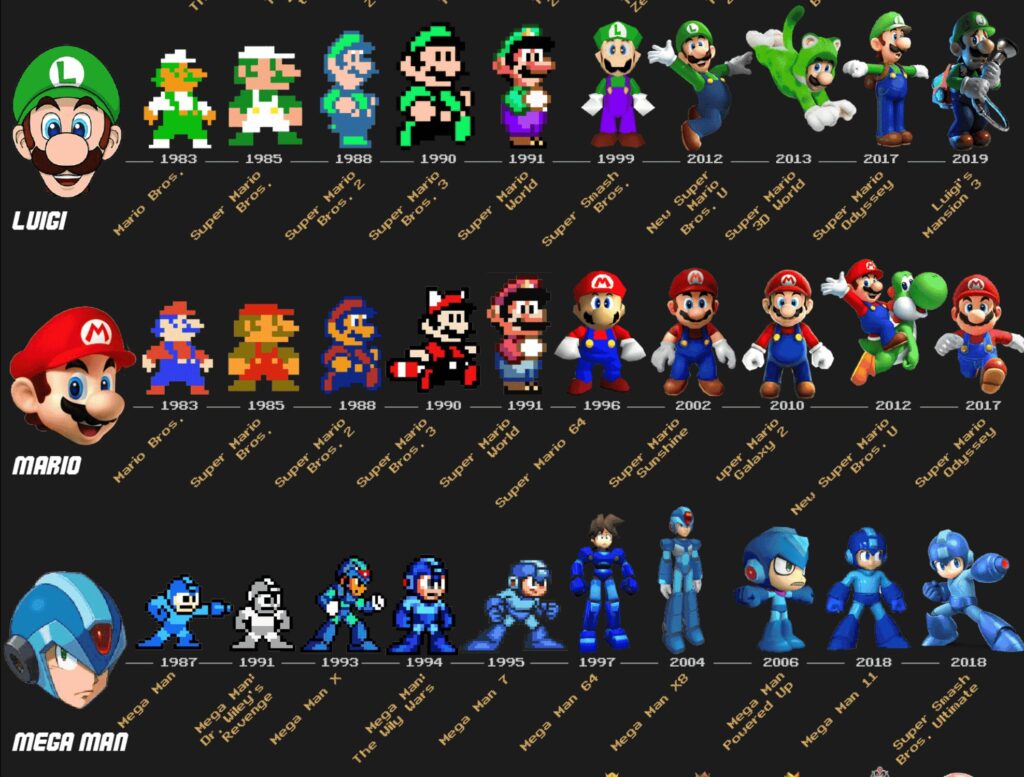
Timeline process of characters Luigi, Mario, and Mega-Man. In the early years, the characters started off as pixelated characters and then eventually evolved into 3D renditions.
Accessed via LinkedIn

From 2D to 3D

The transition from 2D to 3D media occurred around the mid-1990s, bringing a significant shift for video games that allowed companies to explore more variety and creativity.

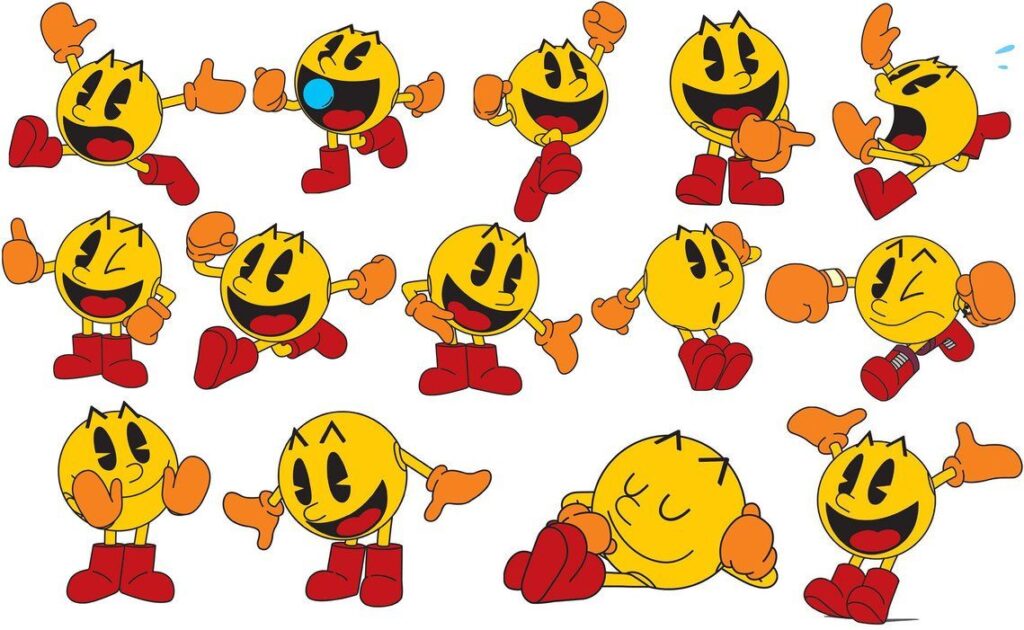
The first-ever video game character design was created by Toru Iwatani, who introduced the popular character “Pac-Man” in 1980. Below you can see the various renditions of “Pac-Man” over the years through the website, The History of Pac-Man

Development of New Mediums

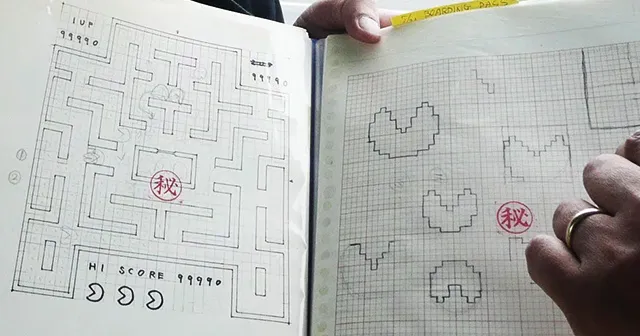
Back then, creators used traditional media such as graph paper for developing early stages of pixel-inspired characters. As newer technology emerged, artists began incorporating software, specifically Blender, Maya, and more, into their practices. Pictured on the right are some of Iwatani’s first-ever Pac-Man concept sketches from 1980. Pac-Man’s design has evolved significantly and is no longer a pixelated character as a result of the evolution in digital technology.

Sources: 

Luigi/Mario’s Creator: Shigeru Miyamoto (1981-1983),  Nintendo

Mega Man’s Creator: Akira Kitamura, Mega Man 1987, Nintendo.  
Original concept drawings of Pac-Man by Toru Iwatani. On the right are the 2D pixel sketches of Pac-Man, while on the left are concept sketches of the map of the game.
Toru Iwatani Pac-Man’s Original Concept Drawings, 1980. Sourced from Imgur.com
Different renditions of Pac-Man expressions from Pac-Man World (2002). These were originally created by Bandai Games Inc.
Pac-Man’s concept art was created for the game “Pac-Man World 2 (2002),” and was created by Namco Bandai Games inc.