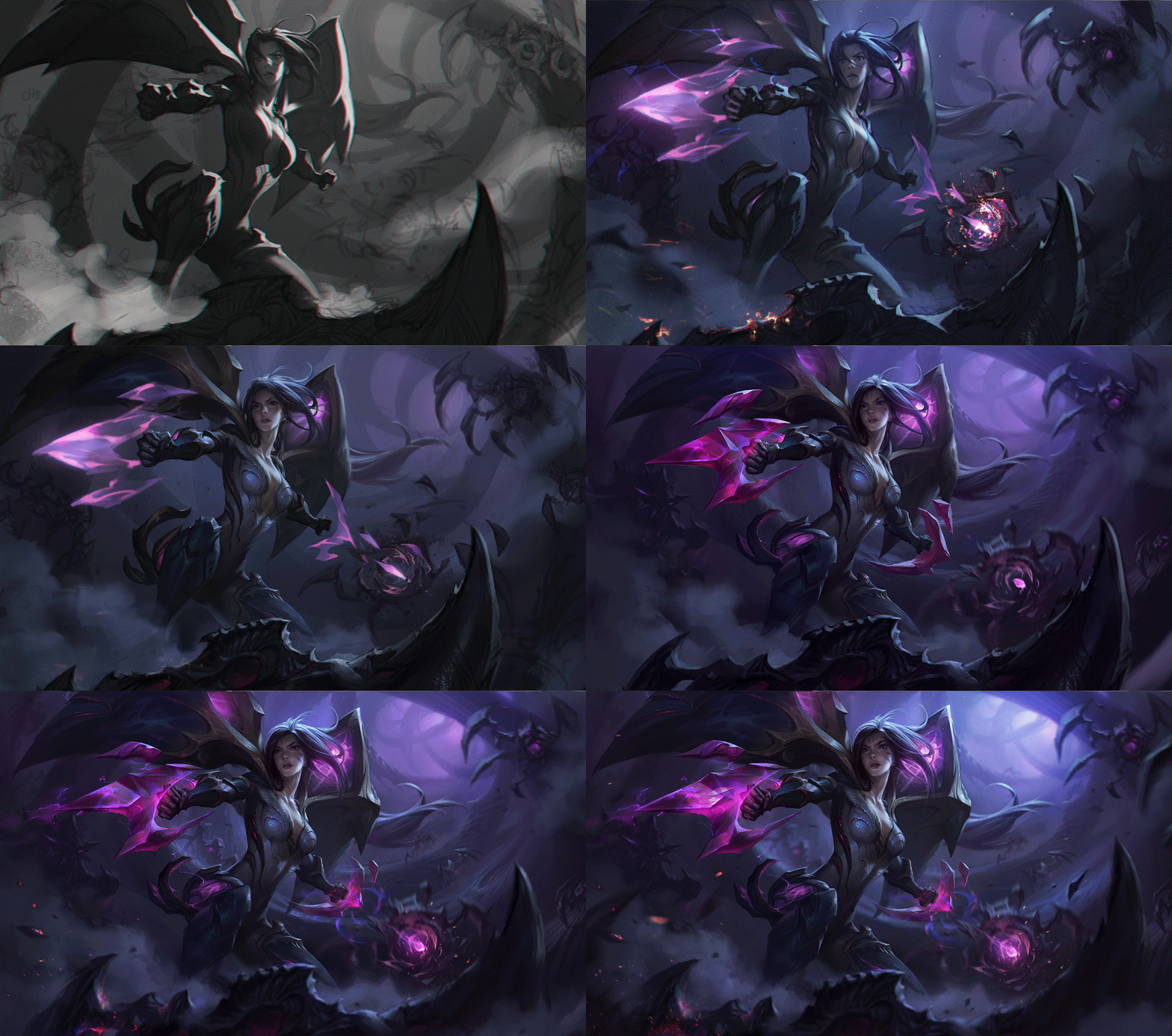
Digital tools have made it easier for artists to share their art progress online, mostly seen through social media posts. These processes, as shown in the GIF on the left, are called “Speed paints.” They’re formatted in time-lapse accelerated videos and show the artistic process one goes through to achieve a final work.
Credit: Chengwei Pan, Kai’sa Splash Art, 2018 (Riot Games).
The first ever software that let artists gain the ability to produce more highly rendered artworks was Sketchpad, developed by Ivan Sutherland in 1963. It emulated the same process used on paper and pen, and was also able to zoom in and out of the file. As technology progressed, a lot more features unique to the digital side of art evolved. Super-Paint, released in 1974 by Richard Shoup, featured the usage of color pixels. For the time, these projects were incredibly ambitious, and the art industry heavily benefited from these, especially after characters were mostly pixelated. Surprisingly enough, the software that a lot of companies, such as Riot Games, Epic Games, use is Photoshop for 2D art, which was originally released in 1990 by John Kroll. For more information about the evolution of digital art software, visit The History of Digital Drawing Software.